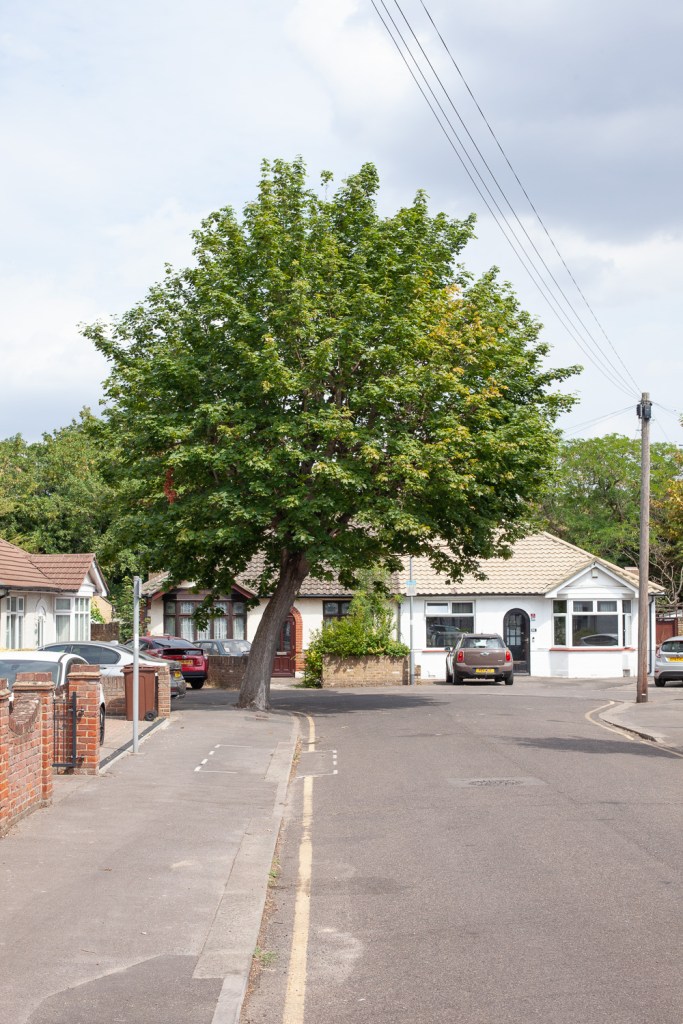
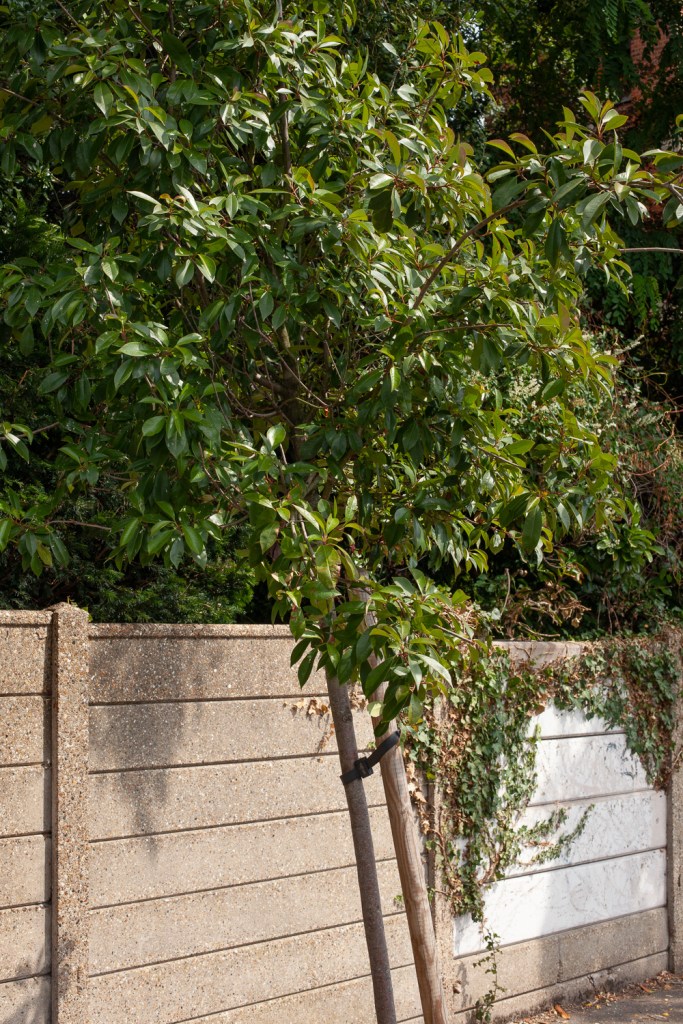
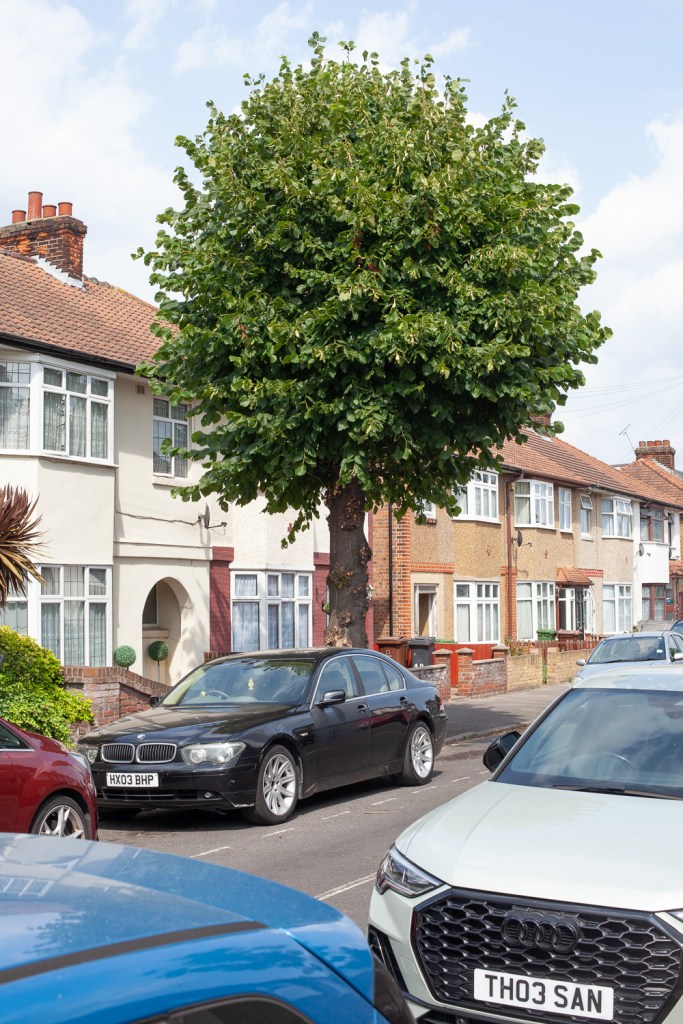
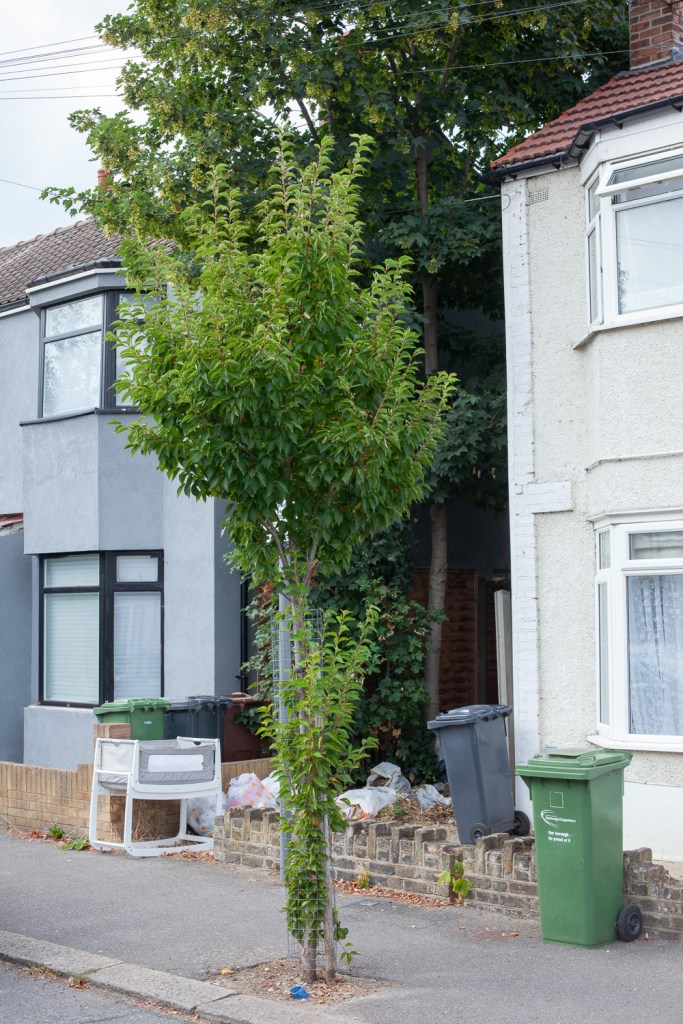
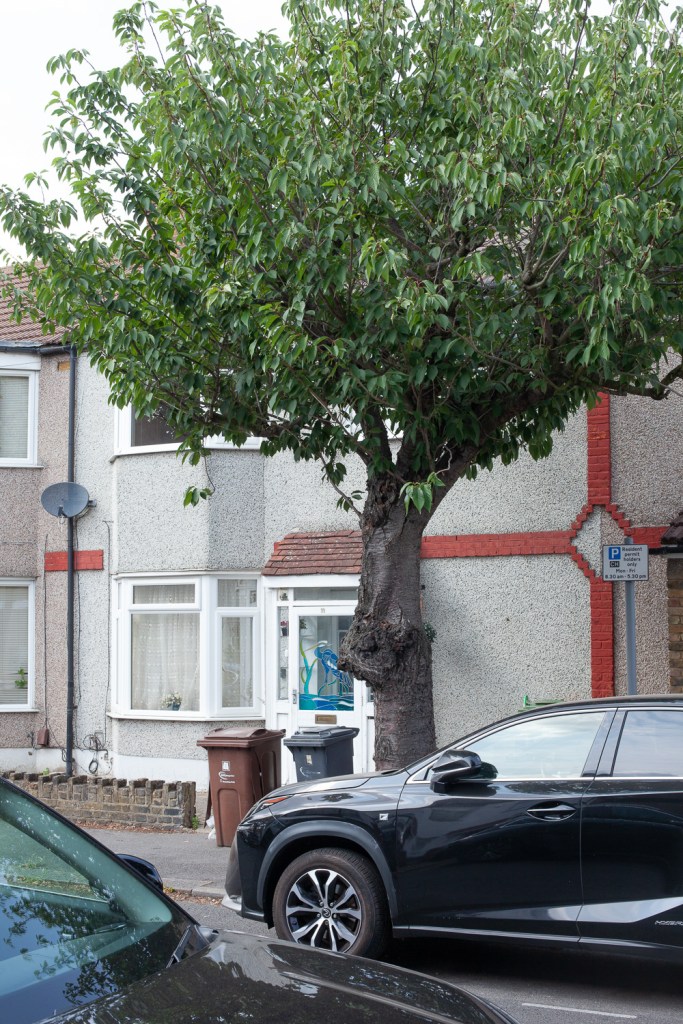
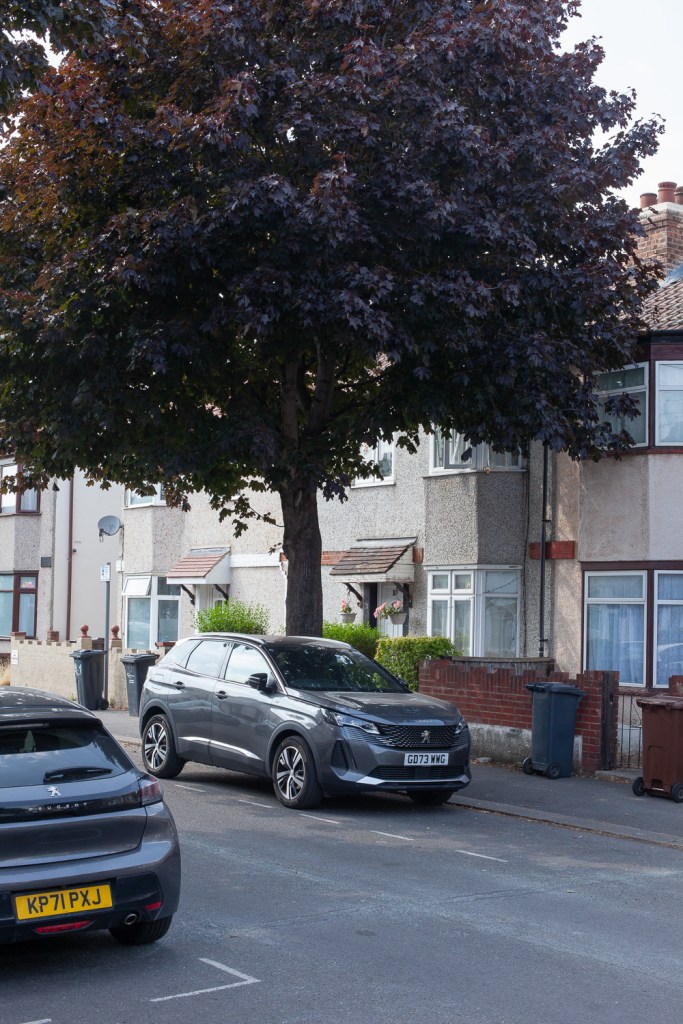
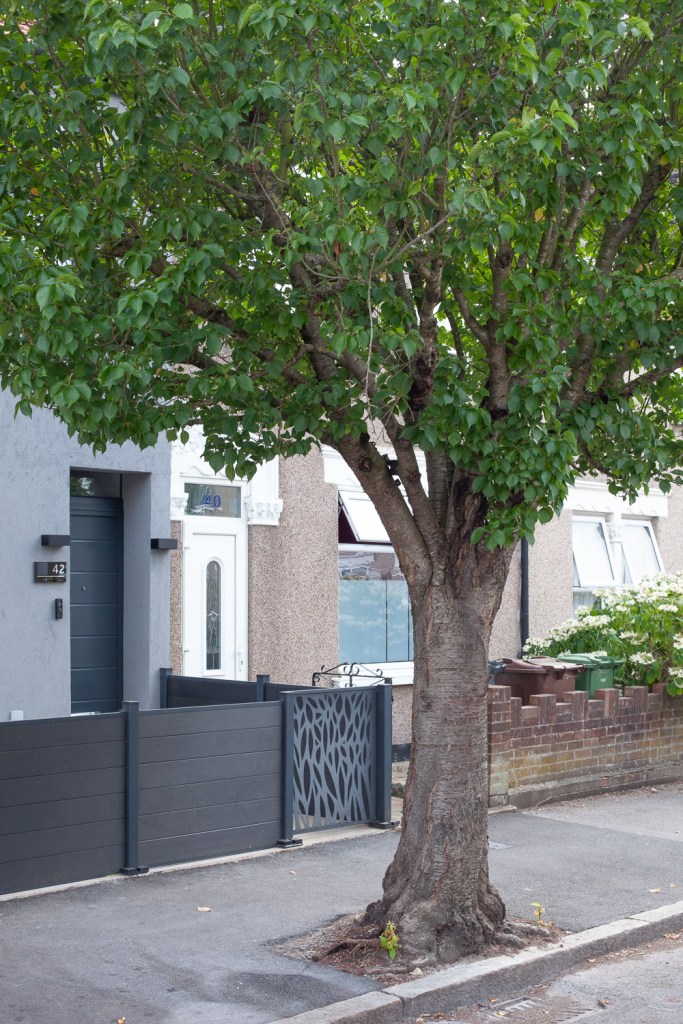
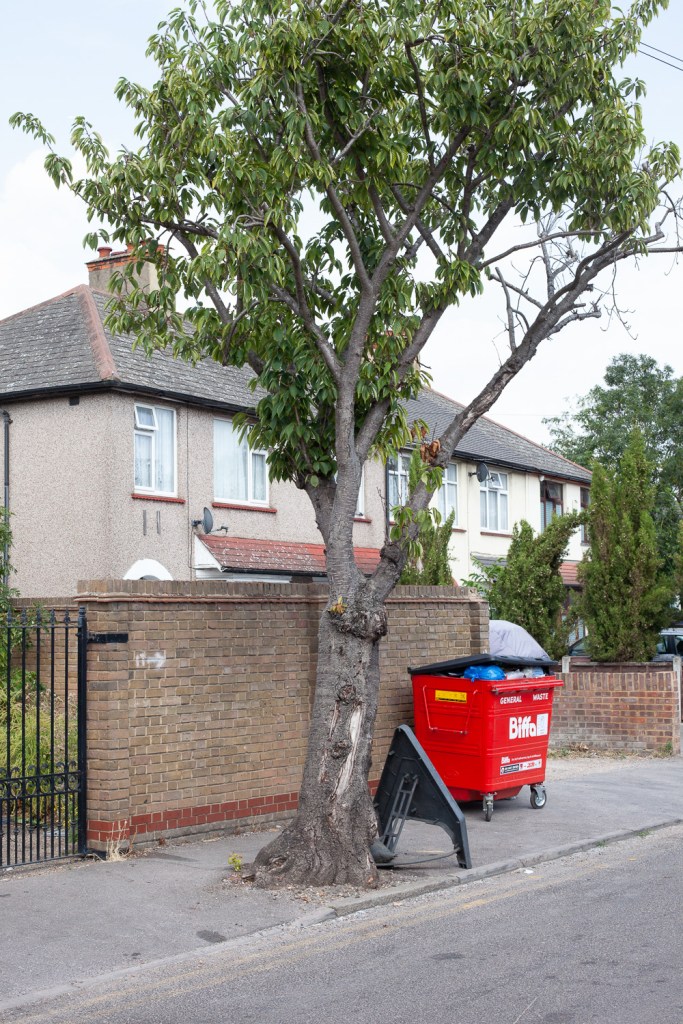
The Becontree Estate in East London is the UK’s largest council housing estate, with around 85,000 residents. Built between 1921 and 1936, it provided 27,000 homes for returning war veterans and working families. At the time, it was the world’s largest housing estate, covering four square miles. Brilliant Trees is a multidisciplinary project employing still photography and video to explore the quiet but enduring presence of council-owned street trees on the Becontree Estate. Through close observation, the work considers these trees as silent witnesses to the socio-political, economic, and globalised forces that have shaped the estate over its centennial history.
Often overlooked, these trees function as living archives—rooted markers of continuity amid cycles of development, policy, and social change. They have stood alongside generations of residents, absorbing the fluctuations of everyday life while bearing witness to histories of transformation and uncertainty. In foregrounding the trees rather than the architecture or inhabitants, the project offers an alternative historical lens—one that privileges duration, resilience, and non-human memory. Brilliant Trees investigates the entanglement of nature and urbanity, positioning the trees as symbols of coexistence within a planned landscape. As urban environments continue to expand and intensify, the work reflects on the fragile balance between human systems and the natural world, and on the civic responsibility embedded in shared urban spaces.
 David Bennett Photographer